I painted four times last week. That probably doesn’t sound like much, especially if I really want to become an artist. But right now, that’s four out of the five weekdays. That’s a long way from not even going back into my office, which is where I was a couple of months ago.
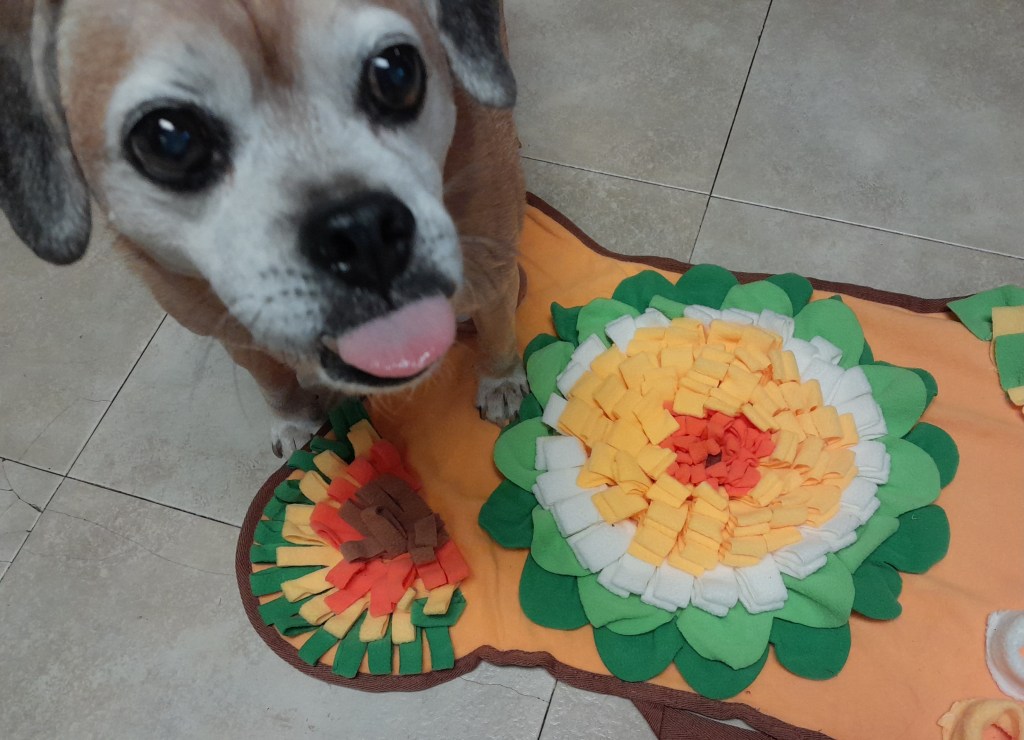
You see, I lost my little painting buddy last August and I just couldn’t make myself go back to my office to paint. My painting table sat there with a partially-completed project on it for months.
Finally, a couple of months ago, I went in and finished my little project (see Note), but I still wasn’t painting with any regularity. I would just go back there, work a little while – if I felt like it – and not accomplish very much. As much as I love painting, I even toyed with the idea of quitting, because I just wasn’t making any progress. But as I said in my post It’s Never Too Late, the person I want to become is an artist.
To steal from Tom Hanks’ famous sentiment in the movie A League of Their Own, “there’s no crying in baseball,” there’s no quitting in trying to become who you want to be.
So I committed to practice. Not every day – I can’t make that kind of commitment. But I can commit to four days a week. And that commitment means actually putting paint on paper. Making tracings for tutorials I’m following or re-doing my palettes (you know, all those busy-work things that allow me to put off actually painting) don’t count.
If I’m going to get better, I have to actually practice putting paint on the paper!
So What Does Progress Look Like?
Sometimes progress looks like we’re getting better at things; our finished products look better, things seem to come more easily to us, and we thoroughly enjoy whatever we’re doing.
Other times, progress looks like we’re going backward. Things aren’t coming as easily, our finished products don’t come out the way we wanted, and the process is just a slog. This can be particularly true when we’re learning something new. For example, this past week I’ve been going back to the basics, and I’ve been doing a Loose Florals Workshop with Alex Kincaid. My sketchbook pages look like something a Kindergartener could do, but I’m pretty happy with them, because I’m learning a lot from Alex. This loose style is something new for me, and I feel like I’m getting some of the basics that I didn’t quite grasp when I first picked up my brushes.
And still other times, progress looks like just ‘putting one foot in front of the other’ and becoming consistent with what we’re trying to make progress in. Whether it’s painting, or getting better at our job, or trying to make wellness changes, etc., sometimes just establishing consistency is progress.
So How Can I Tell If I’m Making Progress?
Progress isn’t always linear, and sometimes it’s hard to assess how we’re progressing by our end results. For example, when I look at my Kindergarten-level sketchbook pages, I may be tempted to think I’m not making any progress. But the fact that I showed up those four days and completed the workshop means that I’ve made progress, regardless of what those pages look like.
Sometimes, though, we can keep a record of our progress. For example, for my wellness endeavors, I keep a record of my weight and measurements each month. That gives me an objective look at how I’m doing. With my painting, I started what I call my Progress Wall. I put some of the paintings I’m happy with up on the wall, and as I add more paintings, I can see how I’ve progressed with certain techniques, styles, etc.
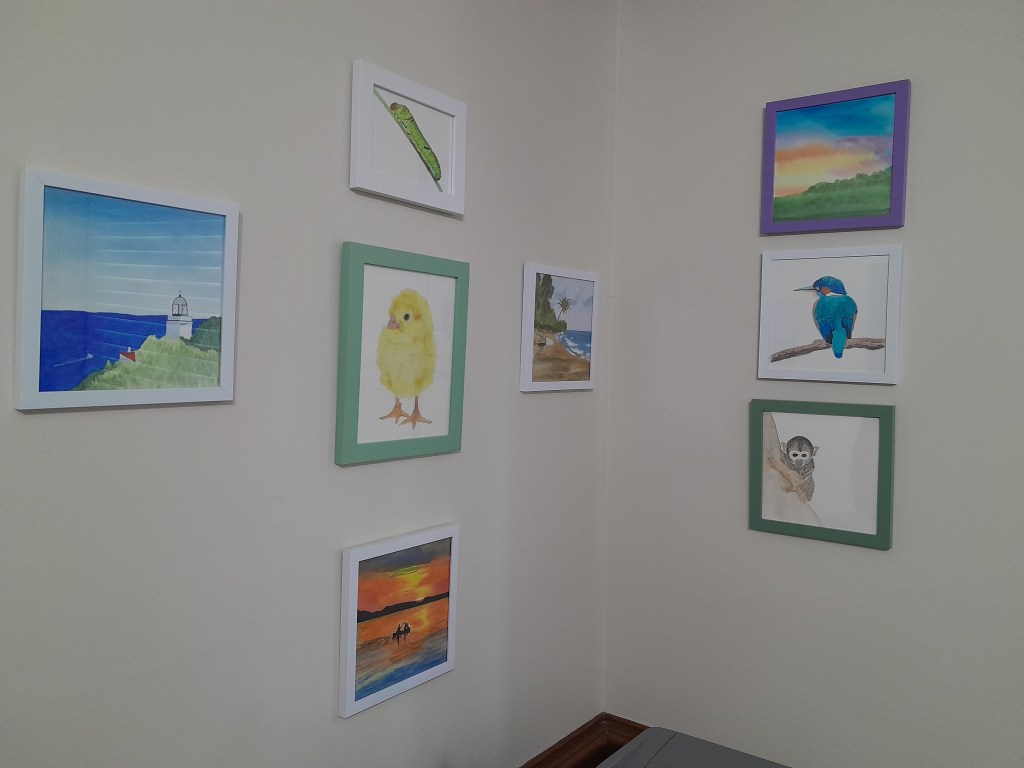
This is my progress wall. Sorry for the terrible picture, but trying to get a decent photo, even with the blinds closed, is almost impossible. No matter what angle I take them from, there are still reflections on the glass.
But what are some other ways we can tell if we’re making progress?
We may find we’re enjoying what we’re doing more (most of the time anyway). For me, a big thing has been how I feel about the actual process of painting. I’m enjoying the process more instead of only enjoying it when I have an end result that I like.
Another place we can tell if we’re making progress is if we see a shift in the way we’re thinking about things. For instance, I’m starting to look at things around me differently – light and shadow, shapes, etc. That makes me feel that maybe, just maybe, I’m developing a little bit of that artist’s eye that I want so badly.
Another way we may be able to tell we’re making progress is that we can let go of the perfectionist mindset. We may start to look at our perceived failures as learning opportunities, realizing that perfection is overrated. We’re able to allow ourselves to take chances, because we’ve let go of the notion that the end result has to be perfect. Now that’s progress!
That old saying “practice makes perfect” may sound good, but that quest for perfection can hold us back sometimes. Rather than inspire us to keep trying, it can serve to discourage us when we can’t reach that stage of perfection we’re aiming for. I think I’ll stick to “practice makes progress.”
What are some ways that you measure progress when you’re learning something new? Do you think having subjective measures in addition to objective ones is useful? Why or why not? Please share!
NOTES:
Credit to Original Artists:
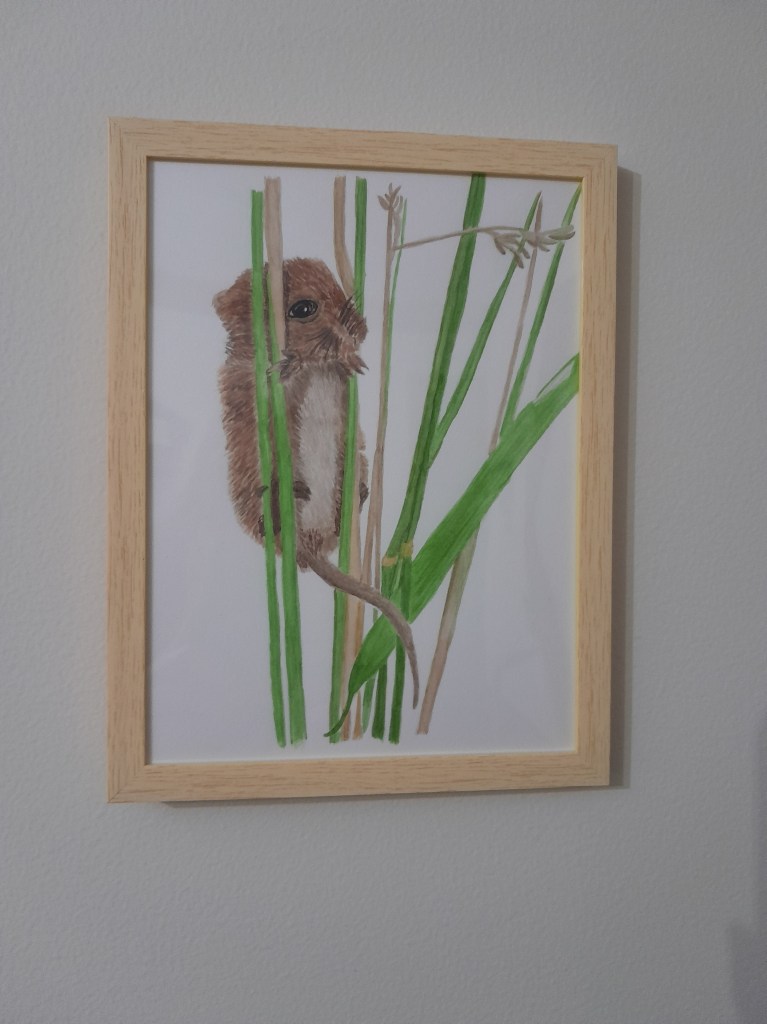
Mouse Painting. “Painting produced using an online video tutorial by Anna Mason at Nature Studio”, naturestudio.com This also applies to the caterpillar and baby chick on the progress wall.
The Kingfisher, Greek landscape, and sunset fishing paintings were produced using video tutorials by Emily Olson at Watercolor Mastery, watercolor mastery.com
The little monkey is from the book, Watercolor With Me In the Jungle by Dana Fox.
The beach scene was done by following a tutorial by Matthew White, at learntopaintwatercolor.com.


 I Wanna Be An Artist
Leave a reply to Terri, I Wanna Be An Artist Cancel reply