
Are you creative? As I said in It’s Never Too Late, I think of myself as a creative soul trapped in a non-artistic body. If you’re like me and think you’re not creative, you may not want to give up on your artistic pursuits just yet. Even if art isn’t really your thing, participating in creative activities can benefit wellness in several ways.
Let’s take a look at just a few of them.
3 ways being creative can benefit your health:
1. Engaging in creative activities can reduce stress.
Who doesn’t need a little less stress in their lives? Being creative can reduce the levels of the stress hormone, cortisol. This is due in part to something some psychologists call “flow.”
According to an article by Therapy Group of NYC, (1) the Flow Genome Project (an organization that researches human performance), defines the state of flow as “those moments of rapt attention and total absorption when you get so focused on the task at hand that everything else disappears and all aspects of performance, both mental and physical, go through the roof.”
I don’t know from personal experience about performance going through the roof, but I can attest to the feeling of being so focused that everything else disappears. I can’t even count how many times we’ve eaten dinner late because I was working on a painting project and lost track of time. Thankfully, my Hubby just goes with it and never complains.
When we’re concentrating on that painting, crochet or quilting project, our novel-in-progress, or any other creative activity, there’s no room for anything else. This flow state actually results from changes in brain function. Our brainwaves slow down (much like during meditation or yoga), our prefrontal cortex quietens, making us less self-critical, and several feel-good chemicals are released.
2. Being creative may help with anxiety and depression.
In several studies, (3) participants saw improvements in levels of anxiety and depression after participating in art therapy. One theory for why this helps is that it can help “develop a greater sense of self through the act of creation.”
Being mindful is strongly connected to good emotional health, and participating in creative activities helps us to be present as we get into that flow state we talked about above.
3. It can help improve quality of life for those with dementia or other neurological diseases.
Creative pursuits can be an important part of self-care for people who are living with dementia or other neurological diseases. Researchers have found that participating in these types of activities can help people regain a sense of self and provide feelings of accomplishment. (4)
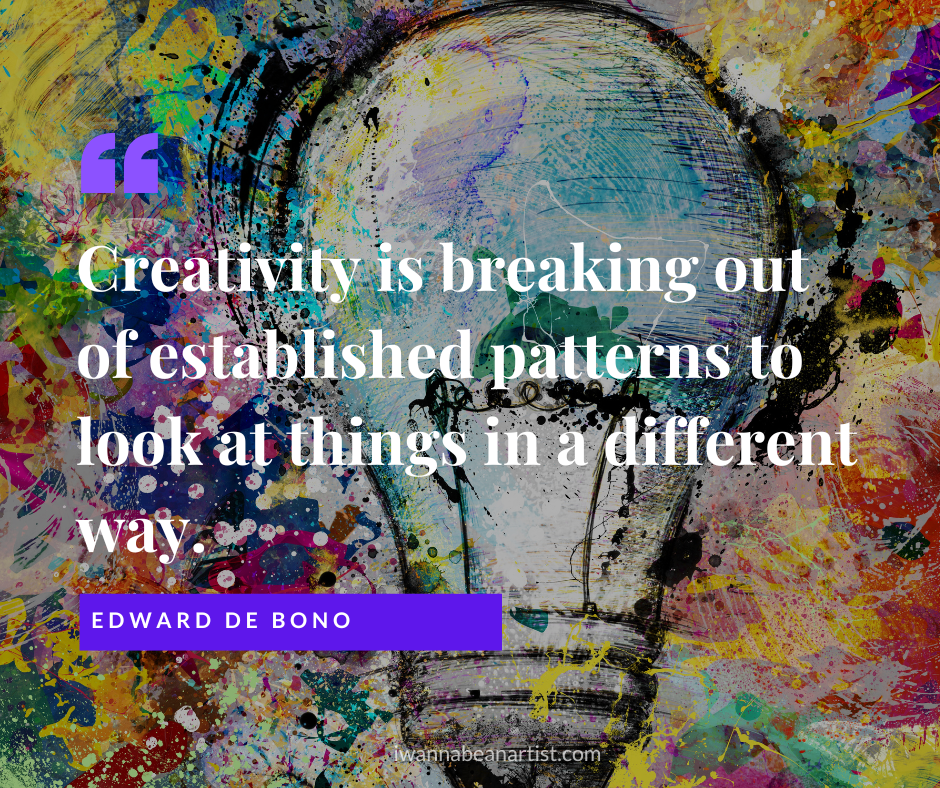
Are you ready to get creative now?
Do any of these benefits encourage you to get busy creating? For some people, the idea of getting creative can be daunting. That’s because we may think of creativity as something like making art or playing a musical instrument — something big.
We also tend to think we have to be “good at it” right away.
The truth is, though, that we can do lots of things that tap into our creativity. Here’s a list of just some of the things we can try to get our creative juices flowing:
- Paint – oil, watercolor, acrylics, your walls….
- Try out some of the adult coloring books you can find almost everywhere these days.
- Start that novel you’ve been thinking of writing.
- Do a DIY project – refresh and repurpose that old stool, make and plant some flower boxes for your porch or windows, etc.
- Make a scrapbook.
- Try a beading project.
- Learn to play a musical instrument.
- Do a decoupage project.
- Plant a garden.
- Learn to knit or crochet.
- Try some new recipes or take a cooking class.
- Build something.
- Develop or brush up on your photography skills.
- Learn the art of hand lettering.
- Learn to sew or do a new sewing project.
These are just a few of the creative activities I could think of off the top of my head. It doesn’t really matter what type of creative pursuits we explore. What matters is that we do it.
Each of us needs to find what helps us unwind and let our minds take a break for a while. It’s important to remember that creativity isn’t a result; it’s a process, and that process is what benefits our wellness.
What types of activities would you add to the list? Which ones do you like to participate in? Please share!
Sources:
(2) https://www.psychologytoday.com/us/blog/the-playing-field/201402/flow-states-and-creativity
(3) https://www.ncbi.nlm.nih.gov/books/NBK279641/

 I Wanna Be An Artist
I’d love to hear your thoughts!